A Low-Setup Game Night with What Is Already There
Plan a low-setup game night with a familiar game, a clear start time and reusable table materials, so play begins without buying anything new.
The common mistake with a low-setup game night is turning it into a shopping errand: special snacks, score sheets and another game can make a relaxed evening feel like an event to produce. The cost is not just extra preparation; it can leave everyone waiting while the host sorts out supplies that were never needed.
Keep the plan small and specific
Choose one game already at home, decide when play will begin, and say what guests can expect. A simple invitation might name the game, give the start time and mention that people can come by for a single round. That is enough to help guests plan without creating a schedule to manage.
Think about what the game actually requires before clearing the table. Check its box or rules for the playing surface, pieces and any space needed for cards or a board. Put out only those items, plus a pencil or scrap paper if scoring calls for them.
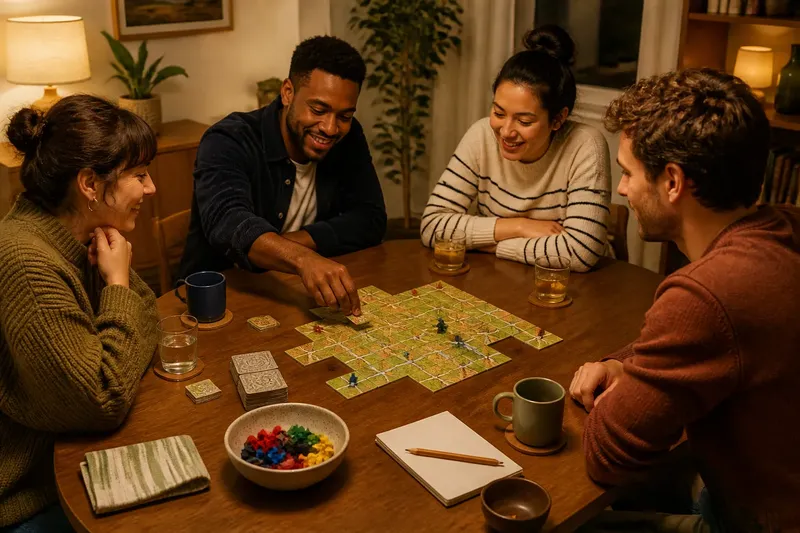
Say you have invited neighbours for a tile game after dinner, and one guest may arrive late. You check that a new round can start without disrupting play, set the tiles on the dining table, and tell the group the evening can end after a round. The expected result is a simple start and a clear point at which everyone can decide whether to continue.
Choose a game that fits the evening
Match the game to the group’s available time, attention and table space. A game people already know can begin promptly; one that needs a long rules explanation may not suit a casual drop-in. Consider whether players can pause, join between rounds or leave without interrupting everyone else.
Check the player count on the box or in the rules, then compare it with who is likely to attend. If the group size is uncertain, choose a game with a flexible player range or keep a familiar card game as a simple alternative. Avoid laying out several options before guests arrive; a choice between two games at the table is usually easier to settle.
Notice practical constraints too. If the table is narrow, a compact card game may fit better than a board with pieces spread across the surface. If people expect to eat while playing, choose something whose components can be kept clear of plates, or finish eating before setting up.
Set a start and a natural stopping point
Give guests a start time and name a sensible endpoint, such as one round or the end of the current game. This makes it easier for people to arrive, leave or decline another round without making the evening feel unfinished.
Allow time for greetings, but do not build a detailed timetable. Before starting another round, ask whether the group wants to continue. If some people are ready to stop, wrap up at a point that works for those still playing rather than assuming everyone wants to stay.
If late arrivals would interrupt the game, mention that they can watch and join at the next round. If the game allows people to enter at any time, give them a brief account of the current position and ask whether they want to take a seat.
Use household supplies only when they help
Start with the game’s own components and the items already in your kitchen or desk drawer. Use a substitute only when it is easy to recognise and does not change how the rules work.
- Observe whether the game needs a score record; if it does, use scrap paper and a pencil, but if it does not, leave both off the table.
- Observe whether loose tokens are crowding the playing area; if they are, put them in a small bowl, but if the rules require them to stay in separate piles, keep those piles visible.
- Observe whether drinks have a clear place away from the board; if they do not, use coasters or a side surface, but if neither is available, move the drinks before setting out pieces.
- Observe whether pieces slide or make unwanted noise on the table; if they do, try a folded tea towel beneath the relevant area, but if it makes pieces hard to handle, remove it.
- Observe whether the group wants help keeping turns moving; if it does, use a kitchen timer only with everyone’s agreement, but if timed turns would feel tense, leave the timer in the drawer.
- Observe whether a proposed substitute could be mistaken for a game component; if it could, choose a clearly different household object, but if no safe substitute is obvious, use the original component or skip the substitution.
Keep drinks and food away from pieces that could be damaged, and do not improvise a replacement when a specific component affects the rules. A useful household item makes play easier to manage; it should not create another question for the group to settle.
What should I prepare before guests arrive?
How much table space does the game need?
Set out the board, cards or tiles and check that each player can reach the shared pieces. If the table is crowded, move unrelated items to a chair or sideboard rather than rearranging the whole room.
Should I set out more than one game?
Usually, keep the main choice to one familiar game and one alternative if attendance or timing is uncertain. Too many boxes on the table can turn a quick decision into a planning session.
What should I do with the rulebook?
Keep it near the game so anyone can check a rule when needed. If a disputed detail affects play, pause and consult the rulebook rather than relying on memory or improvising a new rule without agreement.
When should I put the game away?
Stop when the group reaches the agreed endpoint or people are ready to finish. If players want another round, ask before setting it up; otherwise, return the pieces to the box and leave the table free.
Handle late arrivals and changing energy simply
Choose a joining point before play starts. In a game that is difficult to enter mid-round, tell latecomers when the next round begins and offer them a place to watch. In a game with flexible entry, explain the current position and let them choose whether to join.
When attention fades, offer a straightforward choice: finish the current round, stop for conversation or pack up. If someone wants to leave early, respect that without adding another activity to keep the evening going.
Make the next low-setup game night easier
Put components back in their compartments and return the game to its usual place. Clear away used paper and cups, and note one practical adjustment while it is fresh: perhaps the table needed better light or the chosen game did not suit people arriving at different times.
Keep that adjustment tied to the next invitation rather than turning it into a hosting routine. A low-setup game night needs little more than a suitable game, a workable surface and a clear sense of when people can begin or stop.
For your next low-setup game night, check the player count and table space before inviting people, then decide on a natural stopping point. Those small choices make it easier to use what is already at hand and let the gathering stay casual.